In hospitals, large laundries, textile factories, and even medical centers, industrial washing machines play a crucial role in hygienic and economical laundry cleaning. Due to their large capacity and the need for precise control of detergent and chemical consumption, these machines require devices that can accurately measure the amount of detergent used for each wash cycle.
This is where dosing pumps , or injector pumps, come into play. These pumps are one of the most important components of industrial washing machines. They are responsible for the automatic and precise dosing of detergent, fabric softener, or disinfectant during the wash cycle.
What is a dosing pump?
A dosing pump is a small, specialized pump that uses a diaphragm, a tubing mechanism, or a piston to inject a precise amount of fluid into the main circuit. The main advantage of this type of pump is its flow accuracy. In industrial washing machines, dosing pumps offer the following advantages:
-
Do not use large amounts of detergent (this reduces consumption).
-
The cleaning quality must be constant and consistent.
-
Maintaining healthy tissues and organs.
-
Reducing the human factor in the use of cleaning products.
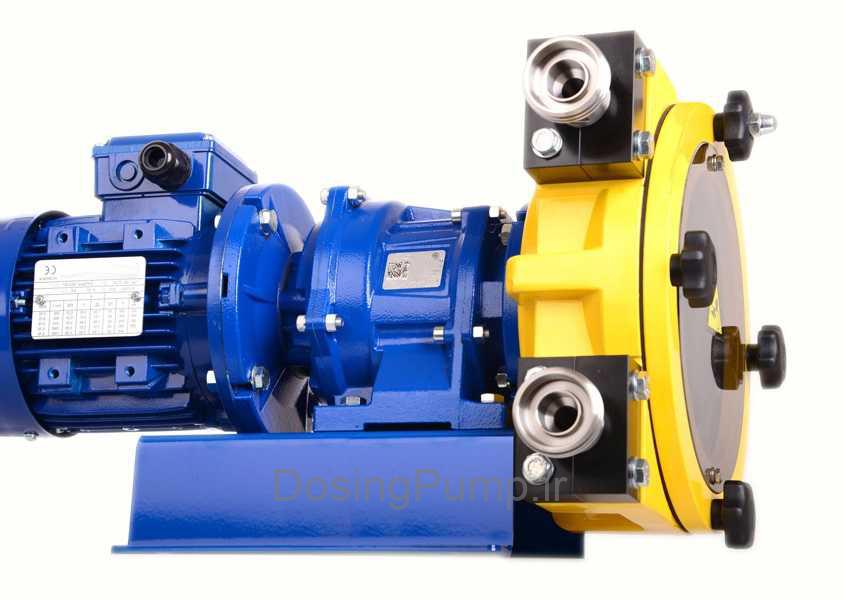
Technical description of the Mytho Hyperion-T series



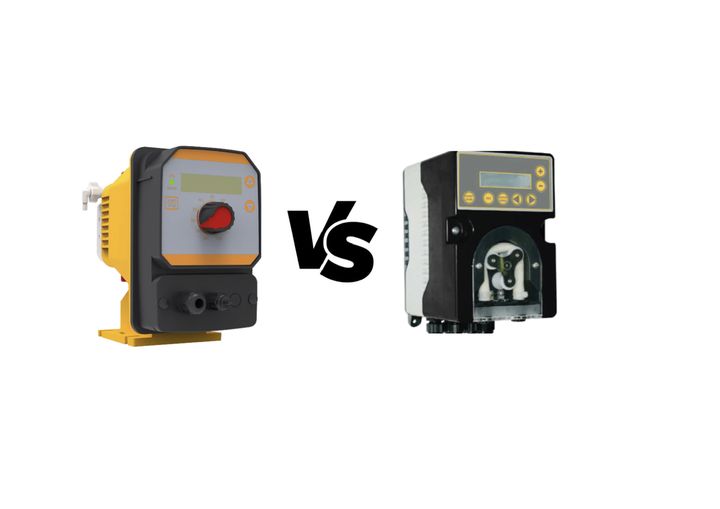 Technical description of the Mytho Hyperion-O series
Why do industrial washing machines need dosing pumps?
-
Cost control:
Industrial cleaning products are expensive. A pump dispenser ensures precise dosing, preventing overuse. -
The cleaning quality is always consistent.
Without these pumps, the cleaning quality depends on the operator. Dosing pumps allow the precise amount of material to be injected every time. -
Extend the lifespan of your appliances.
Too much or too little detergent can damage your sink, pipes, and main pump. Adjusting the pump dosage prevents this. -
Hygiene and safety:
Thorough sterilization of textiles is essential, especially in hospitals and other medical facilities. A dosing pump ensures that the required amount of disinfectant is delivered into the bloodstream. -
Automation and ease of use:
By connecting the dosing pump to the washing machine control system, the washing process is fully automated.
Types of dosing pumps in industrial washing machines
-
Peristaltic dosing pump (hose)
-
The most common type found in industrial laundries.
-
It has a flexible hose that is compressed by rollers.
-
Advantages: Easy to maintain, high precision, suitable for liquid detergents.
-
Disadvantages: Limited working pressure.
-
Diaphragm pump cans
-
A rubber or Teflon membrane is used to move the liquid.
-
Advantages: High chemical resistance and high precision .
-
Disadvantages: Require more maintenance than peristaltic pumps.
-
The piston pump doses
-
The accuracy is very high and injections can be performed at higher pressures.
-
It is mainly used in large capacity industrial washing machines or in the textile industry.
Main components of the dosing system for industrial washing machines
-
Syringe pump (peristaltic pump or diaphragm pump)
-
A control unit or electronic unit for coordinating washing cycles.
-
Chemical-resistant hoses and fittings
-
A detergent level sensor in the tank prevents the pump from running dry.
-
Tanks for detergent and fabric softener
Use of dosing pumps in industrial washing machines
-
Injection of liquid detergent (industrial washing powder)
-
Bleach injections (e.g. sodium hypochlorite )
-
injectable laxative
-
Disinfectant syringes ( for hospitals and medical centers)
-
The introduction of additional chemicals to protect textiles or improve washing quality.

Features of the ideal dosing pump for industrial washing machines
-
Possibility to adjust the injection quantity depending on the boiler power of the machine.
-
High resistance to chemicals , cleaning agents and disinfectants.
-
Easy installation and maintenance , reduced downtime.
-
Possibility of connection to an automation system (PLC or machine control)
-
Long service life and complete spare parts supply.
-
Sealed
Important points when selecting dosing pumps for industrial cleaning
-
Washing machine capacity: The drum size (e.g. 20 kg or 100 kg) determines the pump performance.
-
Cleaner type: Some cleaners require corrosion-resistant hoses or membranes.
-
Amount of material required: Sometimes it is necessary to install several pumps for detergent, fabric softener and bleach .
-
Environmental conditions: The resistance of the pump to ambient humidity and temperature is important .
-
Price and customer service: Brands such as SEKO, Brightwell, ProMinent, and Dema enjoy a high reputation in Iran.
Maintenance and repair of dosing pumps for industrial laundries
-
Check hoses and diaphragms regularly to avoid leaks.
-
Cleaning the connections and the water tank
-
Replace consumables such as hose lines for peristaltic pumps regularly.
-
Calibrate the pump to maintain injection accuracy.
-
Make sure the detergent tank is full to avoid damaging the pump.
Advantages of using dosing pumps in large laundries
-
Significant savings on cleaning supplies (cost reduction of up to 30%)
-
Consistent washing quality across all wash cycles.
-
Reduces the need for manual dosing of cleaning agents by specialists
-
Improve the safety of your employees by avoiding direct contact with chemicals.
-
Reducing washing machine consumption
The future of dosing pumps in industrial washing machines
With technological advances, dosing pumps are becoming increasingly intelligent:
-
Internet of Things (IoT): Online monitoring of detergent consumption.
-
Advanced sensors: Automatically determine the type and amount of material needed based on the weight and type of fabric.
-
Energy saving system: synchronized distribution of chemicals to optimize water and energy consumption.
Finally
Dosing pumps are a key component of industrial washing machines and play a crucial role in controlling costs, improving wash quality, extending machine life, and ensuring safety. Selecting the right pump type (peristaltic, diaphragm, or piston pump) and maintaining it regularly can significantly improve the performance and overall efficiency of your washing machine.
In today’s world where productivity and cleanliness are paramount, using a dosing pump for industrial washing machines is no longer an option, but a necessity.