Pistachios, Iran’s “green gold,” have long played a key role in Iranian agriculture, exports, and culinary traditions. As one of the world’s largest pistachio producers, Iran is constantly striving to increase productivity, conserve water, and improve product quality. In recent decades, the establishment of orchards with drip irrigation systems has emerged as one of the newest and most effective pistachio cultivation methods . This method reduces water consumption by 50–70 % , promotes tree growth, ensures more uniform growth patterns, and improves fruit quality.
Advantages of planting a pistachio grove with drip irrigation
1. Significant water savings:
Traditional irrigation methods such as flood irrigation result in large amounts of water evaporating or seeping deep into the ground. Drip irrigation, on the other hand, delivers the water directly to the tree’s root zone, thus reducing water loss.
2. Uniform water and nutrient distribution:
Thanks to drippers and pressure regulation, each tree receives the required amount of water and nutrients. This uniform distribution ensures synchronous tree growth and a balanced result.
3. Higher yield and improved product quality:
Orchards with drip irrigation allow for precise control of fertilization (fertilizing during irrigation). This improves the size, color, taste, and crunch of the pistachios.
4. Fewer weeds and fungal diseases:
Since this system only moistens the root zone, weed growth is slowed down and the likelihood of fungal and root diseases spreading is reduced.
5. Reduced labor costs:
Drip irrigation eliminates the constant labor required for conventional irrigation. This makes the system easier and cheaper to maintain.
Steps for establishing a pistachio grove with drip irrigation
1. Choose a suitable location.
Selecting the right plot of land is the first step towards successfully establishing a pistachio plantation.
A suitable location must meet the following requirements:
-
The soil is light to medium-heavy (sandy loam) and well-drained.
-
The soil depth is at least 2 meters.
-
Controlled salinity (electrical conductivity less than 8 dS/m)
-
Reliable access to high-quality, regulated water
2. Choose the appropriate variety and rootstock.
The pistachio variety should be selected according to climate conditions , soil composition , and consumer market. The most common pistachio varieties in Iran are:
-
Akbari: Broad reach and market orientation
-
Ahmed Aghaei: Early and export-oriented
-
Kali Kuchi: large, regular grains
-
Vandugi: more resistant to harsh conditions
The most commonly used grafted rootstocks are Baneh, Qazvini, and Badami Zarand . Choosing the right rootstock increases the grapevine’s tolerance to drought and salinity.
3. Garden planning and design
Careful planning before construction begins is essential. Typical planting distances in drip-irrigated pistachio orchards range from 6 x 6 meters to 7 x 7 meters , although adjustments are possible depending on soil type, condition, and the irrigation technology used.
The following factors should be considered during planning:
-
Main and secondary pipeline routes
-
Location of the water source and the pumping station
-
Slope gradients and drainage paths
4. Soil preparation
Before planting the seedlings, the soil must be thoroughly loosened and leveled. It is recommended to fertilize it with well-rotted manure and fertilizers containing sulfur and phosphate.
In the case of saline or alkaline soils, the soil must be washed before planting.
5. Installation of a drip irrigation system
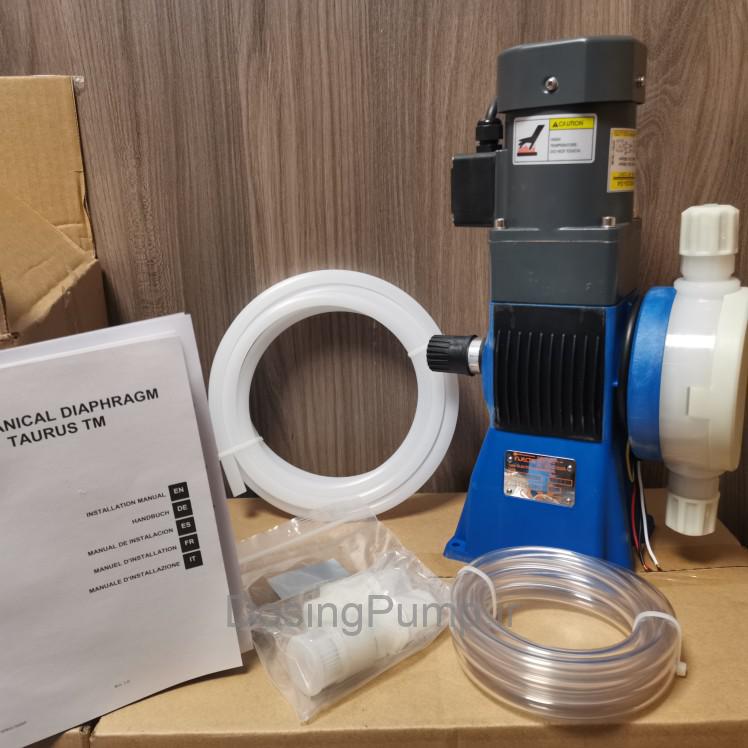
This is the most important step in establishing a modern pistachio plantation. The system includes the following components:
-
Pumps and filter systems: ensure pressure and water purification.
-
Main and branch lines (PE or PVC): are used to transport water to different locations.
-
Drippers: for precise water distribution
-
fertilizer tank and pressure regulating valve
To avoid low water pressure, blocked pipes and water losses, it is recommended to have the irrigation system planned and installed by a professional.
6. Plant pistachio seedlings
The seedlings are usually planted in late winter or early spring . The planting hole should be approximately 60 x 60 x 60 cm. The seedlings are planted vertically to avoid damaging the roots.
After planting, it is recommended to moisten the soil around the roots using a drip irrigation system.

Tips for maintaining a pistachio orchard with drip irrigation
1. Watering schedule:
The amount of water and the timing of watering depend on the age of the tree, the soil type, and the ambient temperature. Young trees are generally watered every 3–4 days, older trees every 7–10 days.
2. Fertilization with a drip irrigation system: By supplying fertilizer via a reservoir, the tree receives precisely the nutrients it needs. Common fertilizers are water-soluble substances such as calcium nitrate, potassium sulfate, and phosphoric acid.
3. Check the drip line for blockages:
The system must be cleaned regularly to prevent blockages caused by deposits, salts, or algae.
4. Pruning and proper fertilization:
Winter pruning is necessary to remove dead and diseased branches and to shape the crown. The use of well-rotted organic compost and manure also contributes to maintaining healthy soil.
The cost of building a pistachio plantation with a drip irrigation system
Costs vary depending on the region, soil type, water quality , and the cost of seedlings and equipment.
On average (as of 1404), establishing a pistachio orchard with drip irrigation cost approximately 350–650 million Toman
per hectare. This includes soil preparation, seedling purchase, irrigation system , fertilizer, planting, and labor costs. Despite the high initial investment, the investment is expected to pay for itself within 5–7 years,
taking into account water savings and increased production.
Problems and solutions
-
Water and soil salinization: Damage can be reduced by using stable foundations, sulfur-containing soil amendments, and regular irrigation.
-
Contamination of the trains: This problem can be prevented by proper filtration, regular acid cleaning and the use of purified water .
-
Winter frosts: An effective solution would be to choose late-flowering varieties and create natural windbreak hedges.
Finally
The development of drip-irrigated pistachio plantations combines traditional Iranian agricultural knowledge with modern technology. This approach creates a sustainable future for pistachio cultivation, conserves water resources, reduces costs, and improves product quality . Through proper soil selection, carefully planned irrigation systems, and expert maintenance, drip-irrigated pistachio plantations can achieve high and cost-effective yields per hectare.
Pistachios grown using drip irrigation technology are not only adapted to the water scarcity in Iran, but are also a symbol of intelligent and progressive agriculture in our arid country.