Use accumulators, pulsation dampeners, or flow equalizers to reduce pulsation pressure in the system and ensure consistent material injection.
He represents
The precise injection of chemicals into process lines is critical in numerous industries, including water and wastewater treatment, petrochemicals, pharmaceuticals, food processing, and even agriculture. Dosing or syringe pumps are used for this purpose. However, a major problem in this field is pulsation, or flow fluctuations at the pump outlet, which can reduce injection accuracy, damage equipment, and compromise the quality of the final product. One solution to this problem is the use of a pulsation flow stabilizer . This device plays a crucial role in improving injection system performance and is an integral part of many industrial projects.
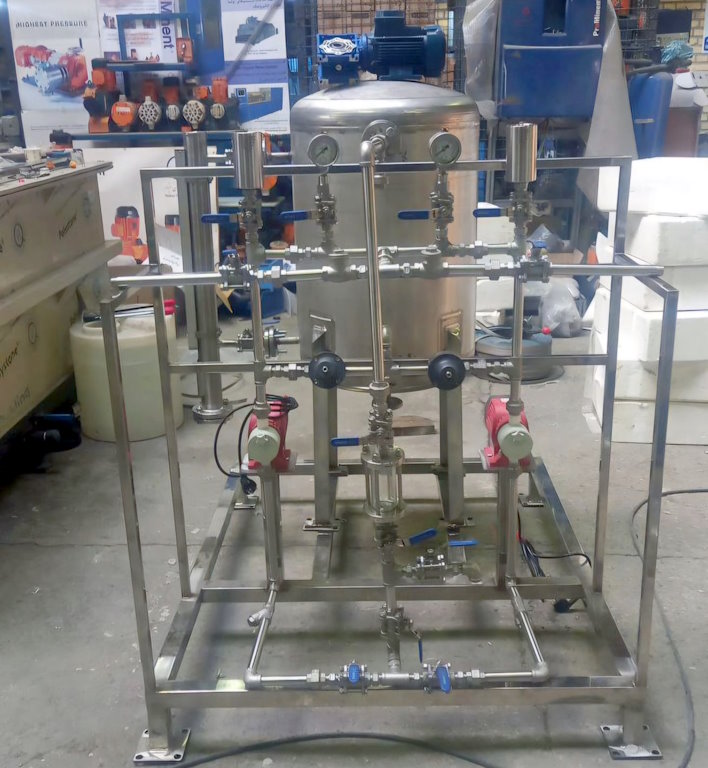
What is a flow meter?
A flow stabilizer is a device installed at the outlet of a dosing pump to convert the pump’s pulsating, uneven flow into a smooth, steady, and fluid flow .
Most metering pumps are positive displacement pumps . These pumps inject fluid into a pipe in pulses through the reciprocating motion of a diaphragm or piston. These pulses generate pressure pulses and instantaneous changes in flow rate.
By absorbing these fluctuations and temporarily storing some of the fluid, the flow stabilizer can regulate the outflow and ultimately provide consumers with a smooth, continuous, and surge-free flow.
Structure and function
A homogenizer usually consists of the following parts:
-
The housing is made
of metal (stainless steel, carbon steel, titanium) or polymer (PVC, PP, PVDF). The choice of material depends on the type of fluid pumped and the operating conditions. -
The diaphragm, the elastic cushion,
is responsible for absorbing and regulating pressure impulses. -
Gas or liquid chamber
: Some models usually have a section filled with an inert gas (e.g. nitrogen) or a chamber filled with compressed air that acts as a shock absorber and absorbs pressure surges.
Mechanism of action
During the pump’s forward stroke, the pressure briefly increases, forcing the fluid into the compensator. The diaphragm and chamber absorb some of the fluid. During the pump’s reverse stroke, the accumulated fluid is released as the pressure decreases. This ensures a continuous linear flow at the outlet.
Advantages of using flow stabilizers
The use of this device offers a number of advantages for industrial plants:
-
High dosing accuracy:
In many processes, such as water chlorination or the dosing of acids and alkalis, even small errors in reagent consumption can have serious consequences. Homogenizers significantly increase dosing accuracy by eliminating pulsations. -
Extends the service life of equipment.
Pressure pulsations cause wear on pipes, fittings, valves, and even the pump itself. Reducing vibrations reduces mechanical stress on equipment and extends its service life. -
Reduce noise and vibration in the system.
Hydraulic shocks are often accompanied by noise and vibration . Sound dampers help reduce noise and vibration. -
Improved mixing quality:
When pumping chemicals into a pipeline, the uniformity of the flow ensures better and more even mixing with the source fluid. -
Energy savings:
Vibration and shock-resistant systems consume less additional energy and improve overall efficiency.
Types of flow measurement equations
Depending on the design and application, homogenizers can be divided into different categories:
-
The most common type is the diaphragm type, which contains a flexible membrane that absorbs flow fluctuations.
-
Gas model (air/nitrogen) This type has
a chamber filled with an inert gas (e.g. nitrogen) that acts as a shock absorber and cushions the impact. -
The mechanical (spring) model uses
a mechanical spring to absorb pressure shocks . -
Hybrid models combine
the above methods and are suitable for special conditions and high pressures.

Important points when choosing a flow stabilizer
To make the right choice of this device, the following parameters should be considered:
-
Type of injection fluid (acidic, alkaline, solvent-based, corrosive, or food-safe)
-
Working pressure of the system
-
Flow rate and pipe size
-
Liquid-compatible materials
-
The type of dosing pump used (diaphragm pump, piston pump, etc.)
-
Environmental conditions (temperature, humidity, exposure to aggressive substances)
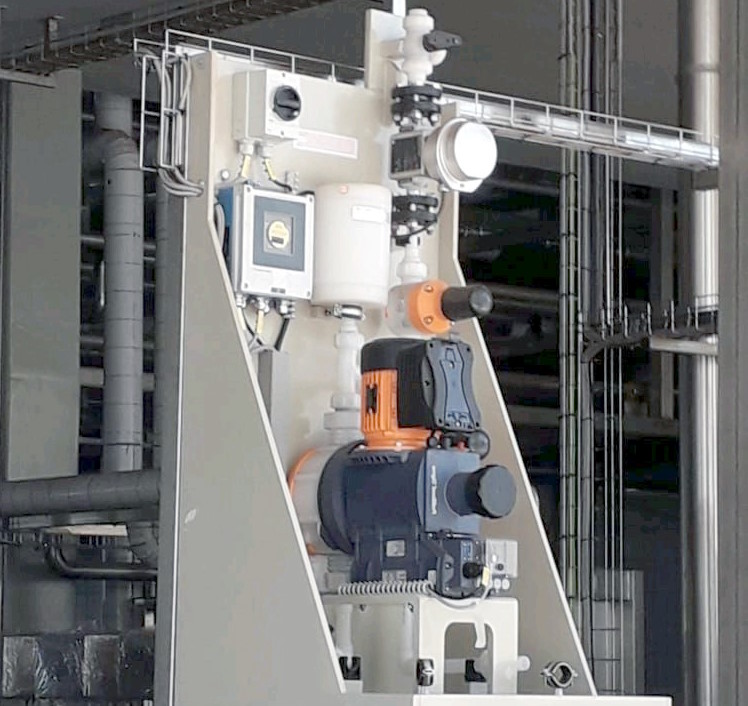
Application for traffic compensation
These devices are used in various industries and sectors, including:
-
Water and wastewater treatment : chlorination and coagulant injection
-
Petrochemical and oil and gas industries : for pumping acids, alkalis and chemical additives.
-
Food and pharmaceutical industry : precision injection of additives and preservatives
-
Agriculture : Application of liquid fertilizers and nutrients to drip irrigation systems.
-
Power plants : Control of chemical feed to prevent corrosion and scale formation
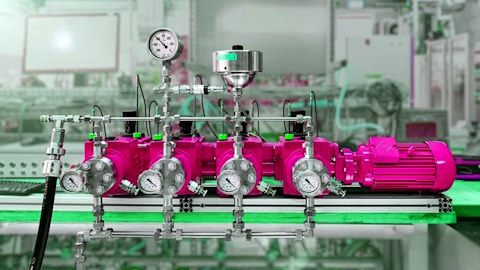
Installation and maintenance
-
Installation location : The compensator is usually installed at the pump outlet, before entering the main line.
-
Gas pressure adjustment : For gas models, the nitrogen or air pressure must be checked and adjusted regularly.
-
Regular inspection : The condition of the membrane or inner cushion should be checked regularly.
-
Material compatibility : When replacing parts, use materials that are compatible with the fluid.
Finally
A dosing flow stabilizer is a simple yet essential device in a chemical dosing system. By eliminating pressure and flow fluctuations, it improves dosing accuracy, extends equipment life, improves product quality, and reduces costs.
Especially in industries with high demands on precision, stability and safety, the use of such devices is not an optional option, but an indispensable necessity.
How to measure a low heart rate
Pulsation dampers are available in different designs: linear dampers and accumulators.
Pulsation dampers are used for low-pulsation dosing and reduce hydraulic resistance in long dosing lines. They are also suitable for viscous liquids. During pressure operation of the dosing pump, the air cushion between the housing and the hose is compressed, and a portion of the liquid is simultaneously metered into the dosing line . The excess pressure created in the air cushion allows the compressed volume to be returned to its original volume during the next suction stroke.
1,021,157 pages
1021120