Reciprocating pumps are a type of positive displacement pumps that are used in various industries, including oil and gas, petrochemicals, pharmaceuticals, water and sewage, due to their high performance and accuracy. The range of piston movement or stroke in these pumps is one of the key factors in determining their efficiency and productivity. In this article, we discuss the concept of piston movement range, its effect on pump performance, and its applications in various industries.
What is the piston range?
The range of motion of the piston or stroke refers to the distance traveled by the piston during one complete cycle of its movement inside the pump cylinder. In other words, the stroke is the distance traveled by the piston from the starting point to the end point of its movement in the cylinder and then back to the starting point. This movement can be linear or reciprocating.

Effect of piston stroke on pump performance
The range of piston movement has a significant impact on the performance and efficiency of reciprocating pumps. Factors that affect the range of piston movement include:
- Displacement Volume: The displacement volume of a pump is the amount of fluid that is displaced during one complete cycle of piston movement. A larger piston stroke provides a larger displacement volume and vice versa. Therefore, it is very important to adjust the piston stroke correctly to achieve the desired displacement volume.
- Output pressure: The range of stroke of the piston affects the output pressure of the pump. A larger piston stroke can help increase the output pressure, but it should be noted that a large piston stroke can damage the productive life of the pump.
- Flow Rate: The range of stroke of the piston affects the flow rate of the fluid inside the pump. As the stroke of the piston increases, the flow rate also increases and vice versa. Correct adjustment of the piston stroke is very important to achieve the desired flow rate.
- Energy Efficiency: The stroke range of the piston also affects the energy efficiency of the pump. A larger stroke can help increase energy efficiency, but energy consumption must also be considered.
Applications of reciprocating pumps with different piston ranges
Reciprocating pumps with different piston stroke ranges are used in different industries. Some common applications of these pumps are:
- Oil and Gas Industry: Large stroke reciprocating pumps are used in the oil and gas industry to transport crude oil and chemicals. These pumps are capable of producing high pressure and moving large volumes of fluid.
- Petrochemical Industry: In the petrochemical industry, medium-range piston reciprocating pumps are used to transfer various chemicals and fluids. These pumps are very efficient due to their high accuracy and precise flow control.
- Pharmaceutical Industry: Small stroke range reciprocating pumps are used in the pharmaceutical industry for precise and controlled movement of pharmaceutical liquids. These pumps are very important due to their high accuracy and ability to control the range of piston movement.
- Water and Wastewater Industry: In the water and wastewater industry, reciprocating pumps with different piston ranges are used for pumping water and wastewater. These pumps are very popular due to their ability to transfer fluids at different flow rates and their resistance to harsh environmental conditions.
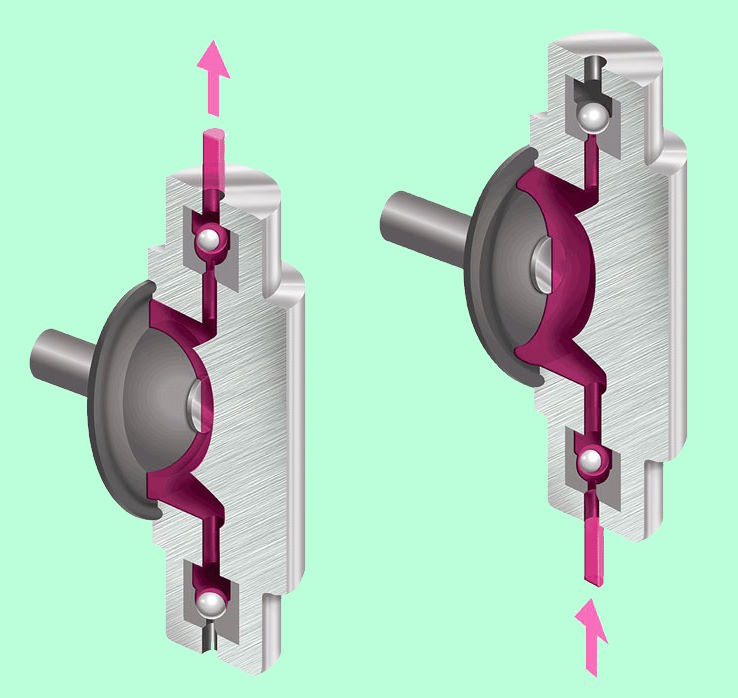
How to adjust the piston movement interval in reciprocating pumps
Correct adjustment of the piston stroke range in reciprocating pumps is vital and must be done carefully. Adjusting the piston stroke range depends on various factors such as the type of fluid, the ambient temperature, the required pressure and the flow rate. Special tools and equipment such as intelligent control systems can be used to adjust the piston stroke range correctly.
conclusion
The range of piston movement or stroke is one of the key factors in determining the performance and efficiency of reciprocating pumps. Proper adjustment of the stroke range of the piston is very important to achieve the required displacement, outlet pressure, flow rate and energy efficiency. Reciprocating pumps with different stroke ranges are used in different industries and each of these pumps has unique features and benefits that can be used according to the needs and environmental conditions. We hope this article has helped you in choosing and using reciprocating pumps.