Introduction
Pumps are essential devices in various industries, responsible for moving liquids from one place to another. Among the many types of pumps, dosing pumps and barrel pumps serve specific purposes, each designed to meet particular needs in different applications. This post delves into the distinctions between these two pumps, exploring their designs, functions, and appropriate uses.
Dosing Pumps: Precision in Liquid Handling
Dosing pumps are specialized positive displacement pumps designed to inject or meter precise amounts of liquids. They are crucial in industries requiring accurate chemical addition, such as water treatment, pharmaceuticals, food and beverage, and oil refining. These pumps are known for their accuracy and ability to handle a wide range of liquid viscosities.
Design and Mechanism:
Dosing pumps operate through various mechanisms, including peristaltic, diaphragm, piston, or gear pumps. Each type offers unique advantages depending on the application. For instance, peristaltic pumps are ideal for handling viscous or abrasive liquids, while piston pumps provide high precision in dosing.
Key Features:
- Precision and Accuracy: Dosing pumps are equipped with adjustable flow rates, stroke lengths, and timing mechanisms to ensure precise liquid dispensing.
- Sensors and Feedback Systems: Some models include sensors to monitor and control the liquid being pumped, enhancing accuracy.

Barrel Pumps: Efficient Liquid Transfer
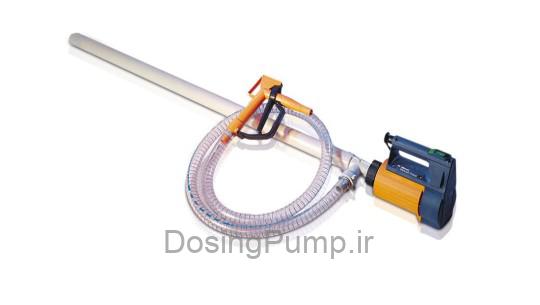
Barrel pumps are designed to efficiently transfer liquids stored in drums or barrels. They are commonly used in industries such as chemical manufacturing, agriculture, and general industrial settings. These pumps can be electric or air-operated and are built to handle the challenges of drum-mounted applications.
Design and Mechanism:
Barrel pumps often feature long suction lines and self-priming capabilities, making them suitable for transferring liquids from drums. They can operate as centrifugal, piston, or air-driven pumps, depending on the liquid properties and flow requirements.
Key Features:
- Drum-Mounted Design: Specifically designed to handle liquids stored in barrels or drums.
- Rugged Construction: Built to be durable and withstand the demands of industrial environments.
Comparison: Dosing Pumps vs. Barrel Pumps
Application-Specific Uses:
- Dosing Pumps: Ideal for applications requiring precise liquid addition, such as chemical dosing in water treatment.
- Barrel Pumps: Suitable for general liquid transfer from drums to processing lines.
Precision and Accuracy:
- Dosing pumps excel in applications needing high precision, while barrel pumps focus on efficient transfer without the need for precise measurement.
Design and Operational Differences:
- Dosing pumps are more complex in design due to their precision requirements, whereas barrel pumps are designed for robust, general-purpose use.
Maintenance and Cost Considerations:
- Dosing pumps, due to their specialized nature, may require more frequent calibration and maintenance, and are generally more expensive.
- Barrel pumps are often more cost-effective for simple transfer operations and may require less maintenance.
Industry-Specific Applications:
- Dosing pumps are prevalent in water treatment, pharmaceuticals, and oil refining.
- Barrel pumps are common in chemical manufacturing and agriculture.
Examples and Case Studies
- Dosing Pumps: In water treatment plants, dosing pumps add chlorine in precise amounts to ensure water safety.
- Barrel Pumps: In chemical plants, barrel pumps transfer raw materials from drums to processing lines efficiently.
Conclusion: Summary of Key Differences
In summary, dosing pumps and barrel pumps serve distinct purposes in industrial settings. Dosing pumps are precision instruments for accurate liquid dispensing, while barrel pumps are designed for efficient liquid transfer from drums. Understanding these differences is crucial for selecting the appropriate pump for specific applications, ensuring optimal performance and safety in various industries.