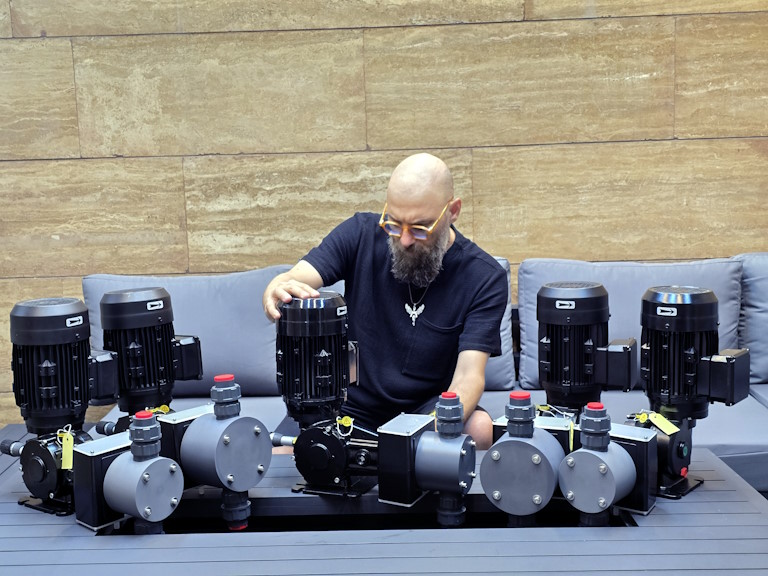
Metering pumps or injection pumps are essential pieces of equipment in various industries such as water and wastewater treatment, chemical, pharmaceutical, food, oil and gas, and others. These pumps are used for precise dosing of chemicals, solutions and liquids. Since the quality of the final product and production processes directly depends on the correct operation of these pumps, quality control of metering pumps is crucial.
In this article, we look at the importance of quality control for metering pumps, testing and inspection methods, relevant standards , and solutions to improve their performance.
The Importance of Quality Control of Metering Pumps
Metering pumps are widely used in areas such as water treatment (chlorine and coagulant injection), the pharmaceutical industry (active ingredient injection) and the chemical industry (pH adjustment). Any dosing error can lead to:
-
Low quality of the final product
-
Chemical waste and rising prices
-
Damage to equipment and production lines
-
Safety and environmental issues
Therefore, the quality control of these pumps not only affects the efficiency of the process, but is also important from an economic and safety point of view.
How to control the quality of pump cans
1. Visual and mechanical inspection
-
Inspect the pump housing for cracks, wear, or defects.
-
Ensure proper sealing (valves, O-rings, and gaskets)
-
Testing the mechanical properties of moving parts such as diaphragms, pistons and valves
2. Checking the dosing accuracy
-
Flow Calibration (Flow Measurement): Compares the actual flow rate of the pump with the value determined by an accurate flow meter.
-
Repeatability test: verification of the consistency of the administered dose in successive cycles.
-
Linearity Test: Evaluation of pump performance at different temperatures and pressures
3. Pressure and leak testing
-
Apply excessive working pressure (hydrostatic test) to ensure pump strength.
-
Leak testing with tracer gases or liquids such as helium in sensitive pumps
4. Testing the performance of electronics and controls
-
Ensure that sensors, displays, and control systems (PLCs) are working properly.
-
Pump Response Tests for Analog and Digital Signals
5. Durability and service life test
-
Simulate operating conditions to assess component wear.
-
Long-term endurance tests (accelerated endurance tests)

Quality Control Standards for Metering Pumps
Compliance with international standards guarantees the quality and safety of metering pumps. The most important of these are:
-
ISO 5198 (centrifugal and metering pumps)
-
API 675 (Standard for Metering Pumps for the Oil and Gas Industry)
-
DIN EN 12266 (Pressure and leak testing)
-
ANSI/HI 7.1-7.5 (Hydraulic and Functional Standards )
 Solutions to improve pump dispensing quality
1. Selection of high-quality raw materials
-
Use corrosion-resistant materials (such as SS316, PTFE, Hastelloy)
-
Uses a durable, flexible membrane.
2. Preventive Maintenance (PM)
-
Calibrate pumps and sensors regularly.
-
Replace O-rings and gaskets as soon as possible.
3. Use an intelligent control system.
-
Automatic adjustment of the injection dose by PID controller
-
Integration with SCADA for real-time monitoring
4. Training of operators
-
Knowledge of pump setup and troubleshooting principles.
-
Emergency Response Training
At last
Quality control of metering pumps is critical to their accuracy, efficiency, and safety. The use of standardized test procedures, compliance with international standards, and the implementation of a preventive maintenance program help prevent costly breakdowns and improve system performance.
Industries that use metering pumps must prioritize strict quality control guidelines to avoid wasted resources and unnecessary production downtime.
Frequently Asked Questions
 Why is the dosing accuracy of a pump so important?
Lack of accuracy can lead to material loss, reduced product quality, and reduced safety.
Does the pump need to be calibrated regularly?
Yes, it should be calibrated annually (or according to the manufacturer’s recommendations) to ensure accuracy.
What factors shorten the service life of a metering pump?
-
Use of inappropriate chemicals
-
Outdated replacement of consumables
-
Operation at pressure outside the permissible range
By adhering to the principles of quality control, you can ensure maximum dosing performance of the pump.