Pumps are used in various industries, such as water treatment, chemicals, food processing, and pharmaceuticals, to transfer liquids. Their precise function depends on several components, the most important of which is the check valve . This small but crucial valve prevents backflow and ensures a directed flow of liquid.
This article discusses the design of a ball check valve, its operating principle, its advantages, areas of application, selection and maintenance.
What is a one-way ball valve?
A ball valve is a mechanical valve that allows the flow of liquids in only one direction . It consists of a ball and a valve seat.
When the fluid pressure in the channel exceeds the spring resistance or the weight of the steel ball , the ball moves and opens the channel. Conversely, if the fluid pressure drops or the flow direction changes, the steel ball automatically falls back onto the valve seat and closes the channel.
Main components of a ball check valve
-
Main construction:
Made from durable materials such as stainless steel, copper, PVC or PP. -
Balls:
These are typically made of steel, polytetrafluoroethylene (PTFE) or ceramic and should have a smooth, polished surface. -
Seat ring:
The part that holds the steel ball and is responsible for tightening it completely. -
Spring (on some models):
Used to open and close the ball more quickly and to prevent flow fluctuations.
The operating principle of a check ball valve
This valve performs a simple but extremely effective function:
-
When the pump is switched on, the fluid pressure causes a steel ball to move, thus opening the passage.
-
If the fluid flow stops or flows in the opposite direction, the ball automatically returns to the valve seat, thus preventing backflow of the fluid.
This process ensures that the pump is always filled with liquid and ready for operation at all times.
Advantages of ball check valves in pumps
-
Preventing backflow of liquid:
The most important function of the valve is to prevent backflow of liquid and damage to the pump. -
Reliable sealing:
Ball bearings and precision fit ensure complete sealing . -
Simple design and low wear:
It has no complex moving parts and is easy to repair and maintain. -
High chemical resistance:
With the right choice of material, they withstand the effects of acids, alkalis and corrosive substances. -
It can be installed in various locations:
horizontally or vertically inside pipes.

Application areas of ball check valves
-
Metering pumps (injection pumps): Prevent the backflow of chemicals into storage tanks.
-
Centrifugal pump: prevents the pipeline from emptying and ensures the uninterrupted operation of the pump.
-
Diaphragm pumps: They precisely control the fluid flow and prevent fluctuations.
-
Chemical and pharmaceutical industry: Transport of corrosive and sensitive substances.
-
Water treatment systems and swimming pools: Prevent chlorine or disinfectant from returning to the water pump.
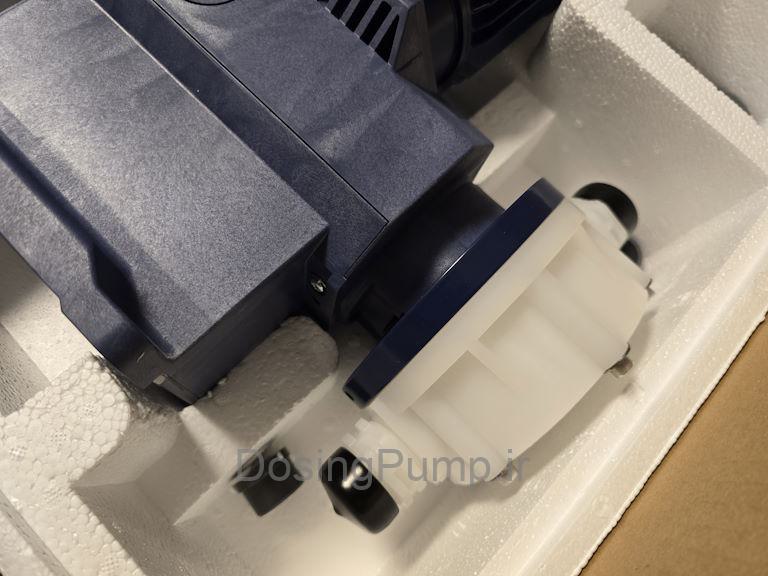
Different types of check ball valves
The choice of valve type should be based on the type of working medium and the operating conditions:
-
Stainless steel:
resistant to pressure and temperature, suitable for use with industrial and aggressive liquids. -
Polyvinyl chloride and polypropylene:
lightweight, chemical-resistant, suitable for use in water and acidic solutions. -
Brass:
Durable and economical, suitable for water and non-corrosive liquids. -
Polytetrafluoroethylene (PTFE):
The material with the highest resistance to highly corrosive chemicals.
Installation and operating instructions for the Grundfos DMH 25x pump
Important points to consider when selecting a ball check valve for a pump.
-
Operating pressure and flow rate: The valve selection should be based on the system’s operating pressure and pump performance
. -
Materials for the body and sphere:
These are selected depending on the type of liquid (acid, alkali, water, oil, etc.). -
Operating temperature:
Some materials, such as PVC, are not suitable for use in high-temperature environments. -
Installation method:
Depending on the piping design, the valve must be able to be installed both horizontally and vertically. -
Product quality:
Choosing a reputable brand can extend the product’s lifespan and reduce maintenance costs.
Maintenance and repair of check ball valves
To extend the service life of valves and ensure their smooth operation, the following points should be observed:
-
Regular checks: Check for leaks or stuck balls.
-
Cleaning: Deposits or solid particles can impair the movement of the ball.
-
Replace the ball or seat: If they are worn or corroded, they must be replaced.
-
To prevent the ingress of suspended particles , use a filter at the pump inlet.
Common problems with ball valves
-
Leaks:
These are caused by wear and tear on the ball or the seat. -
Spherical viscosity: caused by the presence of solid particles
or sediments. -
Reduced water pump performance:
due to blockage or incorrect valve size. -
Unusual noise:
caused by the sudden impact of the projectile on the cartridge case under changing pressure.
In conclusion
The ball check valve is one of the most important and sensitive components of pumps, especially metering pumps. Its simple and effective design prevents backflow of liquid and ensures trouble-free pump operation . Selecting the appropriate material, size, and type according to the operating conditions is crucial for extending pump service life and minimizing maintenance costs.
With regular maintenance and adherence to installation conditions, ball check valves can be used for years without problems in a wide variety of industrial applications and water treatment plants, making them some of the most reliable pump components.
1002267
Valve: 1/2″ MNPT (DN10) PVDF