Metering pumps , also known as injection pumps, are among the most widely used industrial devices for the precise dosing of chemicals in various industries. They are widely used in water treatment as well as in the food, pharmaceutical, and petrochemical industries. The main component of these pumps is a flexible diaphragm, which is responsible for fluid transport and sealing the injection chamber
The diameter and thickness of the pump diaphragm are crucial factors for its design and operation . The choice of these two parameters directly affects injection accuracy, pump lifespan, and even system safety. In this article, we examine the influence of diaphragm diameter and thickness on metering efficiency.
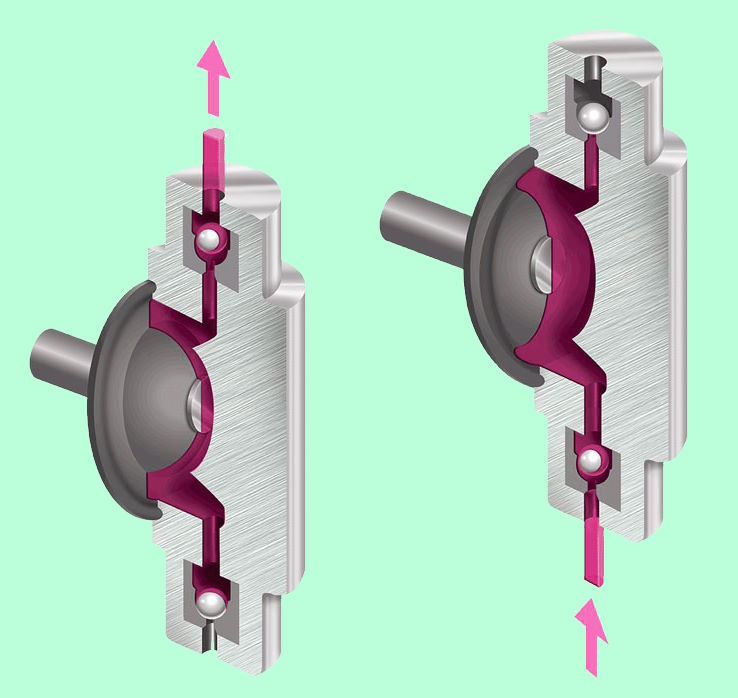
What is a metering pump diaphragm?
A membrane is a flexible membrane , typically made of robust materials such as polytetrafluoroethylene (PTFE), neoprene, or composites. The membrane draws in and expels liquid through a reciprocating motion.
-
During insertion, the membrane moves backward and fluid flows through the one-way valve into the chamber.
-
As the pressure increases, the diaphragm moves forward and fluid is pumped from the outlet valve into the system.
The influence of the diaphragm diameter on pump performance
1. Output capacity
The diaphragm diameter directly affects the delivery volume. The larger the diaphragm diameter, the greater the delivery volume per pumping cycle.
-
Membranes with a larger diameter: higher flow rate, suitable for industrial applications and large production volumes.
-
Smaller diameter membranes: lower flow rates, suitable for precise chemical injection on a small scale.
2. Operating pressure
Generally speaking, the larger the diaphragm diameter, the lower the pressure it can withstand. Therefore, for systems requiring high pressure, it is recommended to choose a diaphragm with a smaller diameter.
3. Injection accuracy
In general, membranes with a smaller diameter allow for more precise control over the amount of substance injected per cycle , which is crucial for industries such as pharmaceuticals or the manufacture of sensitive chemicals.
The influence of membrane thickness on pump performance
1. Mechanical resistance
The thickness of the membrane determines its ability to withstand mechanical pressure and tension.
-
Thicker membrane: more resistant to high pressure and abrasion.
-
Thin layers: more flexible, but less resistant to mechanical stress.
2. Flexibility and rapid responsiveness
Thin membranes generally react more quickly to user movements and allow for higher injection accuracy . Thicker membranes, on the other hand, move more slowly, which can slightly reduce accuracy.
3. Durability
Under extreme operating conditions, using a thicker diaphragm extends its service life. However, excessive diaphragm thickness increases the load on the motor and the pump’s drive mechanism.
Ideal combination of diameter and thickness.
To select the appropriate membrane diameter and membrane thickness, the following balance must be achieved:
-
Large diameter + thin wall thickness: high flow rate , but low pressure resistance.
-
Small diameter + large wall thickness: high pressure, but low flow rate.
-
Balanced diameter and wall thickness: The best results are achieved under typical water treatment and industrial production conditions.
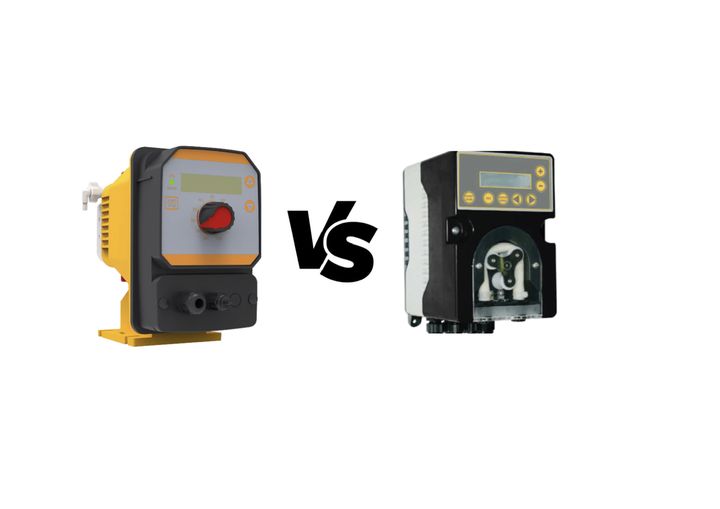
The influence of pump diaphragm diameter and thickness on common pump problems.
-
Fluid leakage: If the membrane is too thin or too
large in diameter , the likelihood of a tear and leakage increases. -
Actual flow rate decreases: If the chosen membrane is thicker than required, its flexibility decreases and the actual flow rate is lower than the calculated value.
-
Premature failure:
The use of barriers under high pressure can lead to premature failure and damage.
Prominent Pumps product catalog 2024
Tips for selecting membrane diameter and thickness
-
Type of liquid: For acidic and corrosive substances, the use of a Teflon film of suitable thickness is recommended.
-
Operating pressure: In high-pressure systems, pipes with a smaller diameter and greater wall thickness should be chosen.
-
Required flow rate: In systems with large injection volumes, the use of membranes with a larger diameter is recommended.
-
Liquid temperature: To avoid deformations and fractures , the appropriate wall thickness must be chosen according to the temperature changes.
-
Industrial applications: In sensitive industries such as the pharmaceutical industry, injection accuracy is of utmost importance, and thinner films with smaller diameters prove to be more advantageous.
Preservation and extension of the membrane’s lifespan.
-
Regular inspection: The membrane should be regularly checked for cracks or deformations.
-
Suitable materials: Selecting materials that are compatible with the fluid can prevent corrosion and expansion.
-
The pump must not run dry: Operation without liquid creates excessive pressure on the diaphragm.
-
Timely replacement: Even with proper maintenance, the membrane must be replaced after a certain period of time.
In conclusion
The diameter and thickness of the pump diaphragm are crucial factors for pump performance during injection and directly influence injection accuracy, operating pressure, flow rate, and pump lifespan . Optimizing these factors based on operating conditions and the type of working fluid improves pump performance and reduces maintenance costs.
-
Membrane diameter: Determines the flow rate and operating pressure.
-
Membrane thickness: Determines mechanical strength and lifespan .
-
Optimal formulation: the key to stable and precise operation of chemical injection systems.
Taking all the above points into consideration, choosing the right diaphragm not only improves the pump’s dosing efficiency , but also increases safety, reduces wear and saves operating costs.