The drilling mud pump is an indispensable piece of equipment in the oil and gas industry. In every drilling project, the drilling fluid circulates through the system like blood; without it, pressure control, drill cuttings transport, and platform cooling would be impossible. The drilling mud pump’s primary function is to generate a constant and uninterrupted flow of drilling fluid and pump it at the required pressure through the drill string to the bottom of the well. This equipment is so critical that many experts maintain that a failure of the drilling mud pump is tantamount to a complete halt to all drilling operations.
This article provides a comprehensive and systematic introduction to drilling mud pumps, including their types, operating principles, components, selection criteria and operating methods under various conditions.

The role of drilling mud pumps in the oil industry
Drilling mud pumps perform several key functions during the drilling process, all of which are essential to ensuring the safety and quality of the work. The most important of these functions include:
1. Pump drilling mud to the bottom of the borehole.
Pumps draw the drilling fluid from the surface rock, generate the necessary pressure, and then pump it through the drill string. As the drilling fluid rises, it carries the drill cuttings away from the borehole head.
2. Cooling and lubrication of the drill bit.
Drill bits are in direct contact with rock and geological formations at great depths, leading to a rapid temperature increase. Injecting drilling fluid facilitates heat exchange and reduces friction, thereby extending the drill bit’s service life.
3. Configuration pressure control
Due to its density and specific gravity, drilling fluid can generate the hydrostatic pressure required to control the formation pressure. Pumps maintain this pressure at a constant and controlled level.
4. Prevention of the collapse of the borehole wall.
The injection of drilling fluid helps to stabilize weak rock formations and prevents borehole collapse. If the injection is stopped, the probability of formation instability increases.
5. Support for information exchange during the drilling process.
In dosing during drilling (MSW) and MSW systems, certain information is transmitted through changes in the drilling fluid flow and pressure; therefore, stable pump operation is crucial.
Types of drilling mud pumps
Sludge pumps are generally divided into two main categories:
1. Piston pump
These pumps, which are most commonly used in drilling operations , typically consist of two cylinders (double cylinder pumps) or three cylinders (triple cylinder pumps).
Advantages:
-
Capable of generating high pressure
-
High wear resistance under harsh conditions.
-
Compatible with double flowers.
Shortage:
-
Electricity fluctuations
-
Regular maintenance of the equipment is required.
Nowadays, three-cylinder pumps are increasingly used because they offer a more stable flow and higher efficiency.
2. Centrifugal pump
These pumps are typically used for surface support work and for conveying drilling fluid and are not suitable for direct injection into boreholes because they cannot deliver the high pressures required for drilling.
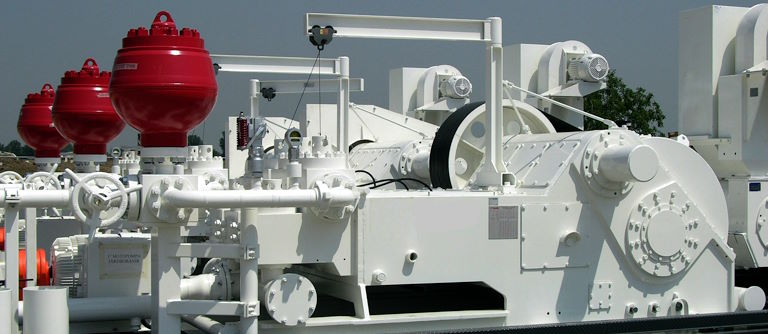
Main components of a drilling mud injection pump
Every drilling mud pump consists of two main components: the drive unit and the hydraulic unit. Understanding these components is essential for selecting and maintaining the pump.
1. Power connection
This component is responsible for generating the mechanical force required to move the piston.
It contains the following components:
-
crankshaft
-
Connection
-
faces
-
transmission
-
Lubrication system
The correct operation of the power unit determines the amount of energy produced and the efficiency of the water pump.
2. Liquid tip
This component is in direct contact with the drilling fluid and is responsible for generating pressure and flow.
Raw materials:
-
liquid cavity
-
Piston and cylinder
-
Intake and exhaust valves
-
drain pipe
The components of the liquid part of the drilling mud must have a high resistance to corrosion and rust, as drilling mud usually contains abrasive substances.
The operating principle of a drilling mud pump
The operating principle of a piston pump can be explained in a few simple steps:
-
Intake phase:
The piston moves back, the intake valve opens and the sludge enters the combustion chamber. -
Compression phase: As the piston moves forward, the sound is compressed
. -
Discharge phase:
The outlet valve opens and the pulp is pumped under pressure from the chamber to the pump outlet .
By repeating this cycle at a specific speed and force, a continuous and uniform flow of drilling fluid can be generated.
Important criteria for selecting drilling mud pumps
Selecting the right pump is one of the most important aspects of operating a drilling rig. Key criteria include:
1. Required operating pressure
As drilling depth increases, so does the pressure required to pump the drilling fluid . Three-cylinder pumps are characterized by their ability to generate high pressure.
2. Dubai needs
This value depends on the drill bit diameter, the type of geological formation, and the drilling speed. The higher the drilling speed , the higher the required pumping rate.
3. Type of drilling fluid
High-density drilling fluids or fluids containing abrasive particles require more powerful pumps and special construction materials.
4. Ease of maintenance
The design of water pumps must ensure quick maintenance and replacement of their components.
5. Energy efficiency
Energy saving, emission reduction , and lower operating costs are crucial. Thanks to its improved design, the new water pump contributes to this reduction in energy consumption.
Operational problems of pumps for injecting drilling mud.
During drilling operations, pumps operate under difficult conditions and face many challenges:
1. Piston and valve wear
The presence of solid particles in the core can prolong repair time and shorten the service life of components. Therefore, the selection of durable materials and proper maintenance are crucial.
2. High temperature
Continuous operation leads to overheating of the power supply, which, if no countermeasures are taken, reduces its efficiency.
3. Power fluctuations
This is an essential feature of piston pumps that are controlled via hydraulic valves.
4. Precipitation
In the case of sludge containing heavy metals, deposits can impair the pump channel.
The importance of maintenance and care of drilling mud pumps
While it’s inappropriate to explain dangerous work practices to young people, the importance of maintenance can be conveyed simply and clearly. Proper pump maintenance helps:
-
Reduced maintenance costs
-
Extending the service life of devices
-
Improving operational safety
-
Reducing the probability of errors in the drilling program.
Regularly checking the condition of the components, maintaining the lubrication quality in the unit, and monitoring the condition of the drilling mud are effective maintenance factors.
New technologies for sludge pumps
Thanks to technological advances, modern water pumps now have the following new features:
1. Digital video surveillance system
Intelligent sensors can measure various parameters such as vibration, temperature and pressure and can be controlled via a central control system.
2. Improved design to reduce power consumption.
New development trends include the use of lighter and more durable materials, new cylinder designs, and intelligent speed control.
3. Improvement of hydraulic efficiency
The reduced losses and improved fluid flow enabled an increase in the overall performance of the system.
Use of drilling mud pumps in various projects.
Drilling mud pumps are used not only in oil and gas drilling, but also in tunnel construction, geotechnical drilling, and even water and wastewater treatment projects. Each project requires different pressures and flow rates depending on the type of rock and operating conditions.
In conclusion
Drilling fluid pumps are among the most important pieces of equipment in the drilling industry and play a crucial role in the safety, efficiency, and quality of drilling operations . Through the continuous injection of drilling fluid, these pumps cool the drill bit, transport the drill cuttings, control the formation pressure, and stabilize the borehole walls.
Understanding pump types, their components, operating principles, operational problems and selection criteria will help you to make more accurate and cost-effective decisions when planning and carrying out drilling operations.