It should first be noted that air ingress during restarting is a serious problem. However, this problem occurs less frequently with an installed liquid level sensor.
The dosing pump, equipped with a level sensor, switches off when the tank is empty to prevent air from entering the pipe.

In many industries, the precise dosing of chemicals is crucial for process quality, plant safety, and cost reduction. Dosing pumps are among the most important devices in this field and are used to dispense precise quantities of liquid at defined intervals. When these pumps are equipped with inlet nozzles featuring level sensors , the system offers enhanced safety, automation, and intelligent functions.
A dosing pump with a level sensor receives signals from a level sensor and controls its operation (on/off and regulation) accordingly. This function is crucial in chemical storage tanks, as emptying or overfilling can cause serious damage .
What is a dosing pump? (Brief description)
A metering pump is a positive displacement pump used for the precise and controlled injection of liquids. Typical applications for these pumps include:
-
chemical products
-
Acids and bases
-
antiseptic
-
polymer
-
Industrial additives
It has already been used.
The dosing pumps are characterized by high flow accuracy and adjustable injection volume. The flow rate can be regulated manually or automatically.
What is a volume control? And what function does it have in the system?
A liquid level sensor is a device that detects whether the liquid level has reached a predefined height . It can be installed at the top or bottom of the tank and controls connected devices (e.g., a pump) using electrical signals.
There are different types of volume control buttons, including:
-
Level symbols
-
Capacitive liquid level indicator
-
Horizontal connecting switch
-
Ultrasonic liquid level sensor
-
Radar level key
Chemical dosing systems typically use level sensors to prevent the pump from running dry .
Dosing concept with pump and input for level sensor
Dosing pumps with a level sensor input have a connection or control input specifically designed for the direct connection of the level sensor . This input can be digital (on/off), and some advanced models also allow for the configuration of the control logic.
For example:
-
When the liquid level in the tank reaches the minimum mark, the level sensor is triggered and sends a stop signal to the pump.
-
Once the tank is filled with water, a signal is given and the water pump starts working again.
Why is the inlet of the liquid level sensor important on a dosing pump?
1. The water pump must not run dry.
Dry running is one of the main causes of dosing pump failure. If the container is empty and the pump continues to run, internal components such as the diaphragm, pump head, and valves can be damaged.
2. Improvement of system security.
In the chemical industry, operating pumps without filling material can lead to the following consequences:
-
Water pump overheating
-
Material leakage
-
This poses security risks.
These risks can be reduced by changing the input data .
3. Extending the service life of the devices
By automatically switching off the water pump in unsuitable situations, consumption can be reduced and the service life of the device extended.
4. Reduced need for manual control.
The system is able to automatically monitor the liquid level without requiring constant monitoring by an operator.
How to coordinate the operation of the dosing pump with the inlet of the liquid level sensor.
The operating principle of this system is as follows:
-
A liquid level sensor was installed in a chemical storage tank.
-
The electrical output contact of the switch is connected to the input contact of the pump level sensor.
-
The pump works perfectly.
-
Reduce the liquid level to the specified limit:
-
Liquid level sensor activated.
-
Send a stop signal to the pump.
-
The water pump was no longer working.
-
-
Once the water tank is full:
-
The key returned to its usual place.
-
The water pump is working again.
-
Dosing pump with inlet for level sensor
1. Dosing with a diaphragm pump
The most common type of dosing pump, typically equipped with an inlet for a level sensor . Suitable for corrosive and toxic substances.
2. Dosing with an electromagnetic pump
These pumps are characterized by low flow rates and are frequently used in water treatment plants and swimming pools. Many models have an inlet for a water level sensor.
3. Dosing with an electric pump
These models are suitable for high flow rates and are widely used in large industrial plants. The liquid level sensor at the inlet of these models plays a crucial role in safety.
ITC Guidelines for Multi-Panel Conferences
Use of dosing pumps with an input for a level sensor.
1. Water and wastewater treatment
Add chlorine, acid, deposit inhibitors and polymers and monitor the liquid level in the chemical tank.
2. Chemical industry
Introducing sensitive substances into the tank after it has been emptied can be dangerous.
3. Food and pharmaceutical industry
Additives are added in accordance with health and safety standards.
4. Pool and sterilization system
Control the supply of chlorine or acid to avoid the risk of the pump drying out.
5. Power plants and the oil and gas industry
Chemicals and corrosion inhibitors are applied to the surface of the tank under strict control .
Advantages of using dosing pumps with an inlet for a level sensor.
-
Improving operational safety
-
Prevent mechanical damage
-
Reduced maintenance costs
-
Fully automatic operation
-
Improving system efficiency
-
Can be connected to programmable logic controllers (PLCs) and control systems.
Important factors to consider when selecting a dosing pump with a level sensor inlet.
1. Chemical compatibility
Pump heads and components that come into contact with liquids must be chemically compatible.
2. Input signal type
Check the inlet of the liquid level sensor:
-
Whether it is opposition or dissenting opinion.
-
It receives the voltage and current required for the operation of the pump.
3. Brand and production quality
Well-known brands typically rely on more advanced security systems at the entrance.
4. Environmental conditions
Temperature, humidity and installation conditions also influence the selection of water pumps.
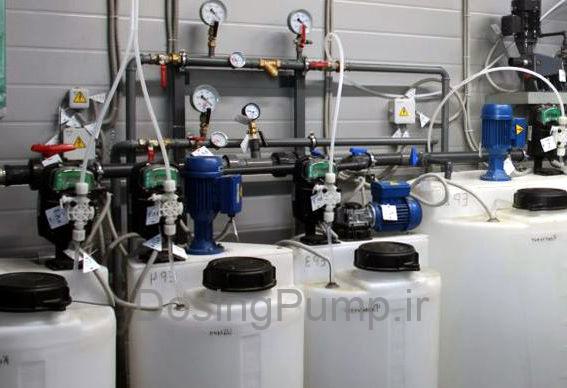
Connect the liquid level sensor to the dosing pump.
Most dosing pumps have a special connection tip with printed markings, such as this one:
-
Beginner level
-
Fluid level control
-
Outer barrier
Once the water level sensor is properly connected to this input port, the water pump can be controlled automatically. It is recommended that the installation be carried out by a qualified professional.
ITC TekdosFP Technical Data Sheet
The difference between conventional dosing pumps and dosing pumps with a level sensor input.
| Special feature | Traditional dosing with a pump | Dosing pump with inlet for level sensor |
|---|---|---|
| Tank level control | NO | Yes |
| Protection | half | higher |
| automation | limited | progressive |
| Risks of dry labor | many | strange |
In conclusion
Calibration pumps with level sensors offer a smart, safe, and cost-effective solution for chemical dosing in various industries. This simple and highly practical feature prevents numerous malfunctions, safety risks, and additional costs. If your system includes chemical storage tanks, using a calibration pump with a level sensor is not only professional but essential.
Ultimately, choosing the right pump, the right level sensor, and proper installation will ensure stable and reliable operation of your system.